Why Cold Rooms Can Be a Winter Health Risk
The living room and the bedroom are the places to start with winter advice from the UK Health Security Agency. In its 13 November explainer, the agency recommends heating the rooms people use most to at least 18°C. Cold can bring on or worsen heart and lung conditions, UKHSA says, with older people, very young children and people with long-term health problems more likely to be affected.
The recommendation is useful before there is ice outside. The agency says that exposure over several moderately cold days can add up, and that harmful effects can begin in temperatures above freezing. Its indoor advice gives a household a starting point even when the weather looks unremarkable.
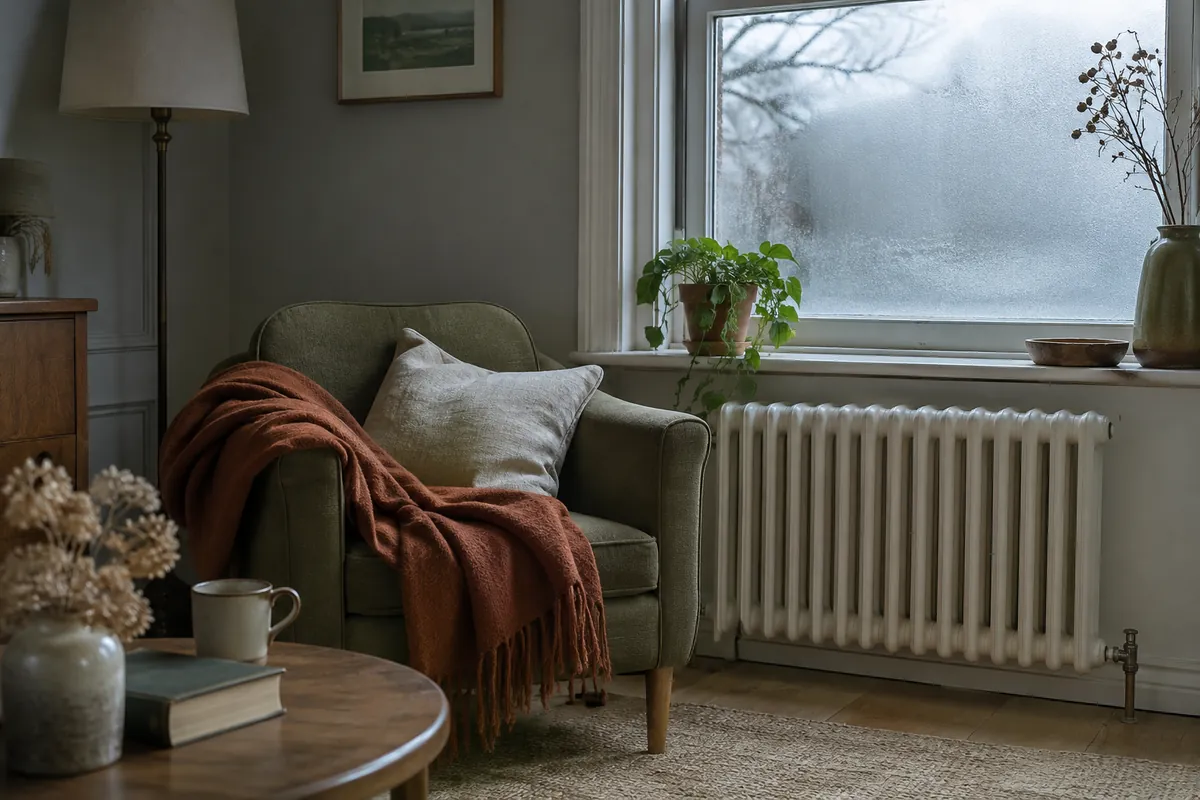
Which rooms does the 18°C advice cover?
UKHSA’s fuller winter guidance for England names the living room and bedroom as examples of rooms where people spend a lot of time. The wording is about where people actually spend their day and night, which may differ from room to room within the same household. A bedroom may matter especially to someone who spends much of the day there. A living room heated during the evening does not establish how warm the bedroom is overnight.
The agency advises a temperature that feels comfortable and recommends aiming for at least 18°C in the rooms used most. The figure is a minimum in that guidance, rather than a maximum or a promise that everyone at that temperature will feel equally warm. UKHSA’s November explainer says the evidence points to adverse effects beginning below 18°C indoors. Its advice is framed for prevention in the home, not as a means of diagnosing someone who has become unwell.
The agency discusses outside temperatures separately. It says effects outdoors can begin at average temperatures between 4°C and 8°C, depending on the circumstances. That range illustrates why a frost warning is a poor substitute for the agency’s guidance on keeping occupied rooms warm. It is also a different measure from the indoor recommendation. A mild-looking outside forecast gives no direct reading of the temperature in a bedroom.
What UKHSA means by at least 18°C
- Where: Rooms people use most, such as a living room or bedroom.
- Target: At least 18°C, with comfort also taken into account.
- Why: UKHSA says evidence points to adverse effects below 18°C indoors.
- When: Several moderately cold days can matter, even without freezing weather.
Who is more likely to be affected by a cold room?
UKHSA identifies older adults, young children and people with heart or lung conditions among those most at risk. The longer guidance also includes people who are housebound or have low mobility, and people who live alone and may not be able to care for themselves. In those circumstances, an assessment of winter readiness involves the person who actually uses the room and may have fewer ways to get warm or obtain help.
The November explainer draws attention to people with dementia or Alzheimer’s disease, who may not recognise that they are cold. The agency advises checking in on older friends, relatives and neighbours, particularly those with a health condition. Its longer guidance suggests asking whether they feel unwell and whether they need practical help. Before bad weather, that might include help getting food or collecting medication. The agency also advises contacting a pharmacist, GP or NHS 111 if there is concern about someone’s health.
UKHSA identifies low income and poor-quality housing as factors that can leave people disproportionately affected. Its explanation of the risk therefore includes the ability to afford heat and the condition of the home, alongside a person’s age or health. Those distinctions matter for a check-in. A question about whether someone needs help with their heating is different from a question about whether they have heard the advice.
How does cold affect the heart and lungs?
The November explainer says the body acts to keep its core temperature steady when a person becomes cold. In describing that response, UKHSA says blood pressure rises and blood becomes more prone to clotting. The agency explains that in someone with a pre-existing condition, a clot in a vessel in the heart or brain can contribute to a heart attack or stroke. This is part of why its winter advice singles out people with existing cardiovascular conditions.
The agency also says cold exposure can constrict the airways and that cold can bring on or worsen lung conditions. Its discussion of winter health includes the separate problem of damp and mould. Mould can develop when moist air condenses on cold surfaces in an inadequately heated home, according to the explainer, and can worsen asthma. The agency’s winter guidance points readers with damp or mould towards finding out what is causing it and how to address it. That concern is broader than the temperature reading alone.
Hypothermia is one consequence of cold exposure, but UKHSA says it accounts for a small proportion of deaths during cold weather compared with heart and lung conditions brought on or worsened by the cold. The agency also describes a lag: deaths from cardiovascular conditions are seen earlier after cold weather starts, while respiratory effects can show up later. That helps explain why the agency frames cold as an ongoing health issue as well as a hazard during a cold snap itself.
What about moving around in and out of the house?
UKHSA says strength and dexterity can decline in the cold, and that cold, damp homes can worsen symptoms for people with arthritis. Outside, the agency identifies snow and ice as hazards for slips and falls and advises wearing shoes with good grip on slippery surfaces. Its guidance for England lists people at risk of falls among those who may be more vulnerable in cold weather. This part of the guidance concerns the person’s ability to get about, rather than just the thermometer reading at home.
The same guidance advises checking food and medication before bad weather in case it becomes harder to leave the house. For someone who cannot leave, it suggests identifying people who could pick up those supplies. That gives a check-in with a relative or neighbour a specific purpose before conditions get worse: finding out whether they can get what they need, and whether someone else is in a position to help.
What changes does the agency suggest making first?
UKHSA suggests trying to reduce draughts, for example with an excluder around a door, and keeping bedroom windows closed at night. It advises wearing several thinner layers, which may keep a person warmer than one thicker layer. Its fuller guidance discusses ventilation separately: airing a room briefly before and after visitors can help reduce the spread of germs, and leaving a window open during a visit may be an option if it is not too cold. The window advice depends on what the room is being used for and when.
For people indoors for long periods, the agency suggests trying not to sit still for more than about an hour. The November explainer notes that small movements, such as flexing fingers and toes, can help when a person is unable to move around. These are the agency’s suggestions alongside keeping the home warm. It does not present them as replacements for heating a cold room.
Some changes are more involved. UKHSA’s guidance for England discusses regular servicing of heating appliances, insulation and improved glazing as possible longer-term steps. Where an energy performance certificate is available, the agency suggests checking it for potential improvements and considering professional advice depending on what the certificate recommends. Servicing also has a separate safety purpose: the November explainer warns that faulty, poorly maintained or poorly ventilated heating or cooking appliances can produce carbon monoxide.
The agency’s short- and longer-term home advice
| When | Options UKHSA describes |
|---|---|
| During everyday use | Heat occupied rooms to at least 18°C, reduce draughts and wear thinner layers. |
| At night | Keep bedroom windows closed. |
| Before longer-term work | Check the energy performance certificate if available; consider professional advice about suggested improvements. |
| For appliance safety | Have heating appliances serviced regularly, as UKHSA advises. |
What if paying for heat is the immediate problem?
UKHSA directs people struggling to heat their homes towards financial and energy-efficiency support. Its England guidance says grants, benefits and advice may help with improvements to heating or with energy bills. The November explainer adds that some support does not require someone to be receiving other benefits. What is available depends on eligibility, so the guidance’s reference to financial help should not be read as a guarantee of a payment.
The agency also suggests contacting the local authority to find out what financial or energy-efficiency support is available locally. It advises people in vulnerable situations to ask their water and power suppliers about the Priority Services Register. The register is described as a free support service; the guidance treats enquiring about it separately from asking about help with the cost of keeping the heating on.
UKHSA’s advice before bad weather
- Check the weather forecast.
- Check that there is enough food and medication if getting out becomes harder.
- Ask older or vulnerable neighbours, friends or relatives whether they need practical help.
- Check eligibility for help with heating costs if keeping rooms warm is difficult.
Frequently Asked Questions
Does it have to be freezing for cold to affect health?
UKHSA says health effects can begin above freezing and that exposure over several moderately cold days can add to the risk. The agency gives separate advice for the rooms people occupy indoors.
Is 18°C a target for every room in the home?
UKHSA tells people to aim for at least 18°C in the rooms where they spend a lot of time. Its examples include a living room and a bedroom, and the fuller guidance also asks people to take their own comfort into account.
Can cold indoors matter to someone who does not complain about it?
UKHSA says people with dementia or Alzheimer’s disease may not recognise that they are cold. The agency advises checking on older or vulnerable people and asking whether they need practical support during colder weather.
Does extra clothing replace the heating advice?
UKHSA suggests several thinner layers as a way to keep warmer. It gives that suggestion alongside heating the rooms people use most to at least 18°C, rather than as an equivalent measure.
Where does UKHSA direct people worried about someone’s health?
Its guidance points people who are concerned about their own health or someone else’s to a local pharmacist, GP or NHS 111 for advice and support. In an emergency in England, the fuller guidance says to dial 999.
Sources
- UK Health Security Agency — The surprising ways cold weather can affect your health
- UK Health Security Agency — Keeping warm and well: staying safe in cold weather