Mosquito season in the UAE: How to keep mosquitoes out
The World Health Organization recommends window screens to help prevent mosquito bites and says domestic water-storage containers should be covered, emptied and cleaned weekly. Dubai Municipality’s advice after heavy rain adds a local checklist: clear stagnant water from places such as plant containers and barrels, and watch for leaks from taps, air conditioners and refrigerators. For a UAE household, that means checking both the openings that let adult mosquitoes in and the places where water sits long enough for mosquitoes to breed.
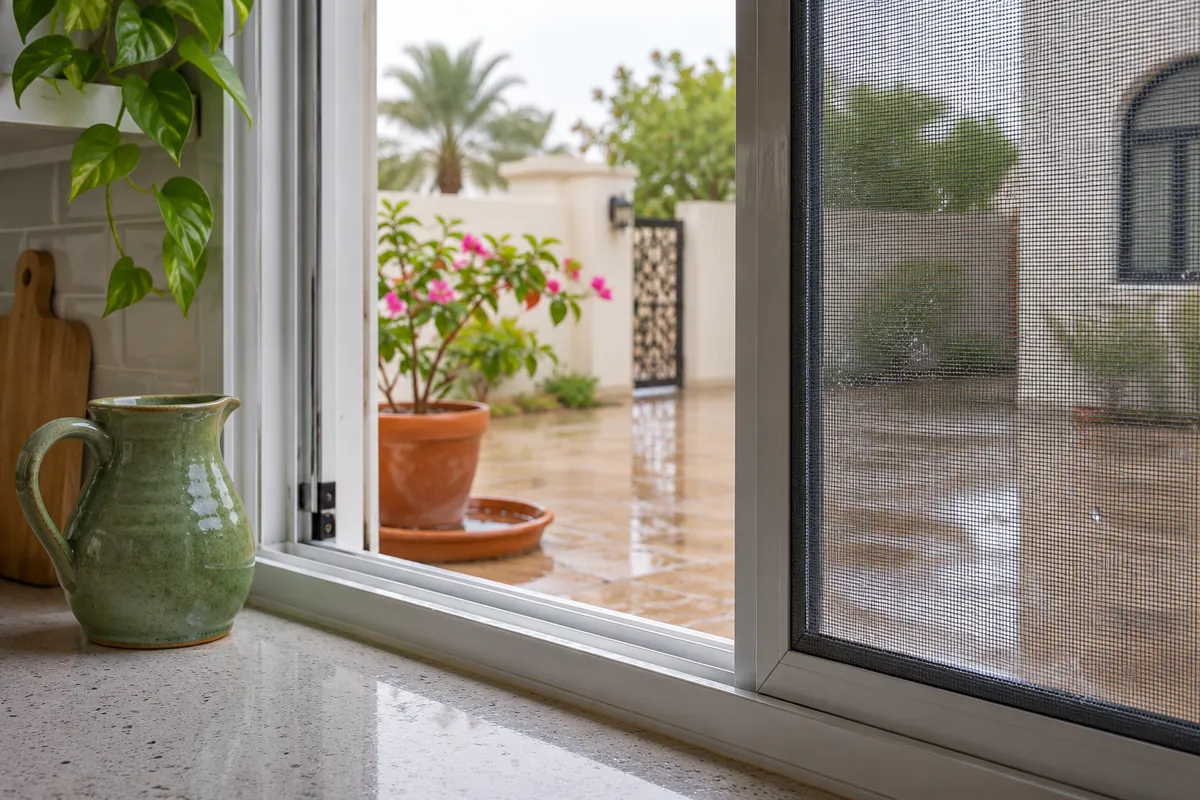
A kitchen window and the plant saucer just outside it can look like parts of the same problem. They call for different jobs. A screen closes off the window when it is open. Emptying and scrubbing the saucer deals with a place mosquitoes could breed, even if nobody opens the window. The checks are easiest to do together, starting with the openings people use and then following the water.
When should a household start checking for mosquitoes?
In Dubai, heavy rain is a practical signal to check the property as soon as it is safe to go outside. After the rainstorms of April 2024, Dubai Municipality stepped up mosquito control at water collection sites and drainage outlets. Its advice to residents covered the water they could deal with much closer to home, from a container that filled in the rain to a puddle fed by a leaking tap. The municipal response offers a cue to inspect after wet weather; it does not set a single start or end date for mosquito season across the UAE.
The check is useful when there has been no rain, too. A container can refill each time the plants are watered, and a leak can keep a spot wet while the rest of the paving dries. Look at what has changed since the last check: a bucket moved out from under cover, a saucer added under a pot, or a wet patch that has returned. A source that keeps refilling calls for a different response from rainwater that can simply be tipped out.
Before leaving a home empty for a trip, it is worth taking a look at whatever would be left out in the rain. An empty bucket can go under cover before anyone leaves. If the plants will be watered while the household is away, the person doing the watering can check the saucers at the same time. On returning, the same practical question applies: what could have filled since the last time anyone looked?
Which openings matter most for keeping mosquitoes out?
Start with the window that actually gets opened and the door that gets left ajar. The United States Centers for Disease Control and Prevention (CDC) recommends installing or repairing screens on doors and windows, using those screens and avoiding propped-open doors, including garage doors. In practice, that puts the kitchen window used most mornings ahead of a spare-room window that stays shut. It also makes a side door worth checking even if every window in the house already has mesh.
Close the screen as it would normally be used and look along the edges as well as across the mesh. A visible opening is a useful thing to note, whether the screen is missing altogether or simply fails to close. The immediate option is to keep that opening shut when it is not needed. A screen only covers its own opening; a door elsewhere in the house can still be the easier way in.
For a regularly used opening that lacks a barrier, Dream Fly Screen is one local example: this Dubai installer supplies custom retractable fly screens made to fit the opening. The other half of the household check takes place away from the window frame, wherever water collects and stays put.
Which opening comes first?
- Window usually shut: put it behind the openings used every day.
- Window opened routinely: check that the screen closes and the mesh has no holes.
- Screen door used for deliveries or garden access: check that it is closed again after people pass through.
- Garage or side door often propped open: change the door habit before adding another screen elsewhere.
Where does standing water get missed?
The easiest places to overlook are often objects that are supposed to hold water for a while. Plant saucers catch runoff; buckets and watering cans wait to be used again. The CDC includes flowerpot saucers, toys, birdbaths and pools in its weekly container check. Its home guidance takes the same check indoors, where vases and saucers can also hold water. A walk that stops at the front door, in either direction, misses part of the list.
Dubai Municipality singles out leaks from taps, air conditioners and refrigerators. The useful distinction is between water that can be emptied and water that will return because something is still leaking. A saucer can be emptied and scrubbed. If the same patch keeps appearing below an appliance, note where it forms and report or arrange a repair as appropriate. Drying the surface each time leaves the source in place.
The same principle applies to larger features, even when the remedy differs. An empty portable pool can be turned upside down after use. For a pool or water feature that cannot simply be emptied, recurring stagnant water is a maintenance question. In a shared property, the location of the water matters as much as the type of container: a resident can turn over a bucket at home, while a persistent wet area by a communal pool belongs on the building manager’s list.
Why does the water keep coming back?
| Where it collects | What to do next |
|---|---|
| Plant saucer after watering | Empty and scrub it; check again after the next watering. |
| Loose bucket or toy after rain | Empty and scrub it, then store it upside down or under cover. |
| Household water-storage container | Keep it covered; empty and clean it weekly as WHO advises. |
| Wet patch below a tap or appliance | Check for a recurring leak and arrange a repair or report it. |
| Stagnant water at a communal pool | Give building management the exact location so maintenance can inspect it. |
Is tipping out the water enough?
For a container that will stay in use, the CDC advises emptying and scrubbing it, not just pouring the water away. Its household guidance says the weekly routine removes mosquito eggs and larvae. That makes the inside of a saucer or vase part of the job. If the item will stand out in the rain again, turning it over or putting it somewhere dry also prevents the next refill.
Stored water needs a slightly different routine. WHO recommends covering, emptying and cleaning domestic water-storage containers weekly. The CDC specifies a tight cover so mosquitoes cannot get in to lay eggs. A lid set loosely on top can leave an opening; the check is whether it fits after each use. Where a container is inaccessible or part of the building’s infrastructure, the practical household action is to flag it to whoever can service it safely.
The weekly round and the check after rain serve different purposes. The first catches routine refills, such as the saucer under an indoor plant. The second catches things that are normally dry. Both are easier to remember when attached to something already on the household calendar: watering the plants, taking the bins out or putting the garden furniture back after rain.
The weekly water round
- Start indoors: check vases and plant saucers for standing water.
- Step outside: look under pots and check buckets, toys and other loose containers.
- Empty and scrub items that will be used again; turn over or put away anything unused.
- Check that stored water is tightly covered and that the weekly clean is scheduled.
- After rain, make an extra pass for containers that are normally dry.
What helps when people are outside the screened room?
A screen helps inside the space it encloses. For time spent outdoors, WHO’s dengue guidance recommends clothing that covers as much skin as possible and lists repellents containing DEET, picaridin or IR3535. The CDC advises following the product label, including directions on when to reapply. Repellent helps protect the person wearing it; it leaves the open doorway and the standing water exactly as they were.
Timing matters here. WHO says the mosquitoes that spread dengue are active during the day. That detail makes the evening an unreliable starting point for precautions. A resident checking pots in daylight or walking through a garden has a reason to consider the same bite protection as someone sitting outdoors later. The guidance describes when to take precautions; it gives no basis for judging from a bite whether an insect carried dengue.
What if mosquitoes still turn up inside?
Check whether the room has a route in that was missed on the first pass. A service door may spend part of the day propped open. A vase or planter can hold water inside a home even when the outdoor containers have been cleared. The CDC includes both entry points and indoor sources in its home guidance. Seeing an adult mosquito in a room does not establish where it came from; it is a reason to check both possibilities.
The CDC also notes that an indoor insecticide can kill mosquitoes already inside, but that using it alone will not keep a home free of them. A resident considering treatment can start with the practical question of what will still be there afterwards. If a door still stays open or a container still holds water, the underlying job remains.
For a continuing problem that needs assessment, Dubai Municipality’s Public Health Pest Control Section publishes a list of companies licensed for pest control in the emirate. When asking for an assessment, a household can say where the insects keep appearing and what has already been checked. It helps to be specific about items that are easy to miss: whether the screen was closed at the time, for example, or whether the water in a planter has returned since it was emptied. Those are observations to pass on, not a diagnosis of the source.
Who handles standing water beyond the front door?
An apartment resident may be able to clear a vase or planter and still have no access to a wet service area. A report to building management is more useful if it identifies the spot and says whether the water returned following rain, irrigation or cleanup. A photo taken from a safe, accessible place can help the maintenance team find it. The resident does not need to decide whether the spot contains mosquito larvae before reporting recurring water.
For a public area in Dubai, the municipality’s pest control section lists parks and other public facilities among the places it covers. It gives its telephone number as 800 900. A waterlogged spot in a public park and a puddle beside a plant pot inside a home need different people to act. The resident’s checklist should stop where safe access and responsibility stop.
Who can deal with the water?
- Inside the home or in a private garden: clear accessible containers and arrange repair for a recurring leak.
- Shared grounds or service areas: tell building management where the water collects and when it returns.
- Public facilities in Dubai: Dubai Municipality’s Public Health Pest Control Section lists 800 900.
Frequently Asked Questions
What is the best mosquito net for windows in Dubai?
For keeping mosquitoes out, a window screen needs intact mesh and must cover the opening when the window is in use. WHO recommends window screens for bite prevention but does not specify a particular brand or screen design in its dengue guidance. It makes sense to start with whichever window is opened most often.
Can mosquitoes bite during the day?
Yes. WHO says the mosquitoes that spread dengue are active during the day. Screens and personal bite protection have a purpose before dusk as well as afterwards.
Should plant saucers be emptied if there has been no rain?
Yes, if they are holding water from irrigation or ordinary watering. The CDC includes flowerpot saucers in its weekly empty-and-scrub advice, both indoors and out. An extra check after rain is useful for objects that do not usually collect water.
Is a lid enough for a water-storage container?
A tight lid can stop mosquitoes getting inside to lay eggs, according to the CDC. WHO also recommends emptying and cleaning domestic water-storage containers weekly. The cover belongs in that routine rather than replacing it.
Will an indoor spray solve a repeated mosquito problem?
Indoor spray targets the mosquitoes already in the room; a closed screen and emptied containers address how they return. The CDC says it will not keep a home free of mosquitoes on its own. A repeat problem warrants another look at doors, screens and water-holding containers before assuming more spray is the answer.
What should a resident report about water in a shared area?
Give building management the location, the latest time it was seen and any pattern the resident has noticed. Water beside a particular sprinkler after irrigation is a more useful description than a general complaint about mosquitoes. If the source is unclear, the report can simply say that the same patch keeps returning.
Sources
- World Health Organization — Dengue
- Dubai Government Media Office — Dubai Municipality initiates comprehensive pest control strategies Response to Weather Challenges
- Dubai Municipality — Public Health Pest Control Section
- United States Centers for Disease Control and Prevention — Preventing Mosquito Bites
- United States Centers for Disease Control and Prevention — Mosquito Control at Home